taught me more than I realized
Thirty years ago I moved to Tuscany. I left my cozy carriage house on Church Street in Charleston– “slightly north of Broad” — and spent a couple years tending sheep and horses and olives and chestnut trees, on a mountainside on a 400 year old farm.
I remember the farm like it was yesterday. I can still feel the steep hillside, where I sat and looked across the Tiber Valley. The light is so pure I could see the tiny sheep on the other hillside, many many miles away. I can still hear the shuffle and murmur of our own sheep, all around, calmly munching everything that appealed to them, their soft mouths able to eat even the wild and thorny berry bushes.
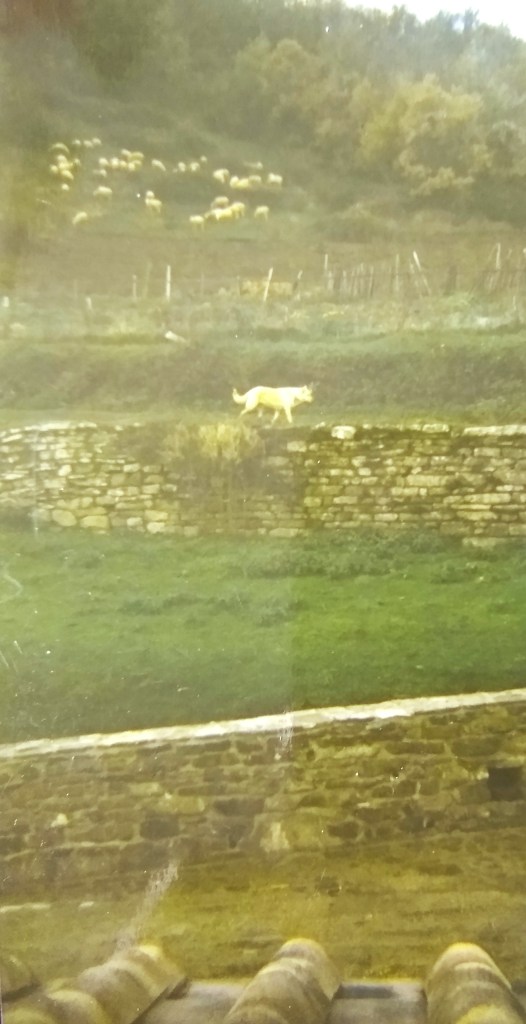
I will always remember the first morning I sat like that and realized there had been someone like me, surrounded by grazing sheep, since the Etruscans – more than 3000 years — and probably in that same meadow. The steep grassy slopes of Tuscany have been home to shepherds since before the Romans, and shepherding there has changed little in that time.
My responsibilities were simple: if the sheep were in a high meadow that wasn’t fenced, I stayed with them. I kept an eye, and the dog kept a lookout. Wild boars were the biggest threat, though they rarely came through in daylight. But occasionally sheep got stuck in places, like thick bushes that trapped their wool in thorns. Or they wandered and didn’t realize the herd was no longer around them.
Those were the sheep we had to look for when we went down to another meadow, or to the barn for the night.
Just like Jesus. The illustration of searching for the lost sheep was not lost on me. You want them all safe. I wasn’t much of a Christian at the time, but I knew the shepherd stories well. I knew why Jesus would walk the hills and rock outcroppings until he found that lost one. Sheep are precious, rather sweet, and they follow a leader faithfully, whether it is the chief sheep, or the human.
Unlike goats, who are a Biblical metaphor for another time, sheep are passive and gentle. With the exception of rams, or the occasional fierce mother, they are rarely aggressive. And not particularly curious. They usually don’t just “wander off.” They like the group. They are safe in the herd. Content.
So, as a shepherd, I learned quiet.
Sometimes I listened to my Walkman (ask your grandmother), or carried a paperback, but most often, I just sat and looked. I wasn’t even a practicing artist then, but the hills and valleys of Tuscany are like nowhere else. There is a reason the Renaiisance painters loved them so. The light itself is almost magic. It is clear and crisp, unmuted by layers of jungle humidity, or ripples of desert heat. And it has an almost golden glow to it, much of the year.
The light on the coast of Maine, where I grew up, is laden with moisture, but it’s not laden in the same way as it is here, in the coastal marshes of the Lowcountry, where I live now. Nor is the light the same in either place as it is in, say, Key West, even though Key West is coastal, and pretty humid. The desert light in Las Vegas is different from the desert light in Oman.
But the light in Tuscany is different from them all. It is crisp and clean, but it is also buttery, and golden. It feels as thought it should have a taste.
Of course the winter light is different, and the Tiber Valley can be shrouded in fog, but most days I was up with the sheep, it was absolutely like the art history books said, the source for all the della Francescas, and the other painters I sought out in the tiny hilltown churches; or the Titians and Rapheals in the grand churches in Venice. They painted golds and russets and sunlight so that you want to crawl into the paintings.
And, at least in the 1990s, Tuscany still looked like nothing had changed since the 1300s, or even the times of Jesus.
The little villages were still mostly made of hand hewn stone, with tiled roofs like the Romans made. Our own farmhouse was over 400 years old, with walls 3 feet thick, built by industrious monks, who then planted the rows of olive trees we still harvested.
And there is something very comforting in all of that. The timeless method of shepherding; the ancient, gnarled trees still giving us abundant harvests of fruit mentioned in the Bible; the unique effect of geography on sunlight, the same in the 20th Century as it had been in the 12th — all of those things calmed my city-grown soul.
When I came back from two years in Tuscany, I called it “therapy with sheep.” It was that. But it was much more, and the “more” would emerge over the following two decades, as I painted my stories and told them on paper. The sheep therapists gave me untold subliminal lessons in patience, faith, gentleness, trust, and responsibility*, to name a few. The sheep and the farm we lived on gave me the visceral understanding of stewardship. Of the importance of the smallest details, and the larger circular system.
Every child should spend a month on a real farm.
Everyone should see how the natural circle of life works: how small we really are in the big picture, but how even a little piece is important. The world size picture that isn’t on a screen. The one where a pack of wild boars can destroy the winter food of 100 sheep. Or a couple feet of snow can close the road to your village. A landslide can do the same. Insects can eat the chestnuts, and drought destroy the rest. Or the herd of feral dogs eats all the chickens and rabbits, in one night.
The sheep taught me to watch different things. The small steps and the big skies.
No worldly issues mattered to me and the sheep on the hillside. Life went on, without any participation from us at all. And it will continue without us for centuries to come. That young Etruscan shepherd, in 900 BC, was probably studying the sheep on the hill across the valley, just like I did. His Iron Age existence was no less important than my 20th Century one.
So, the zen of sheepherding taught me to stop, and quiet. Quiet my mind, and my body, and let the history flow around me. It never got old.
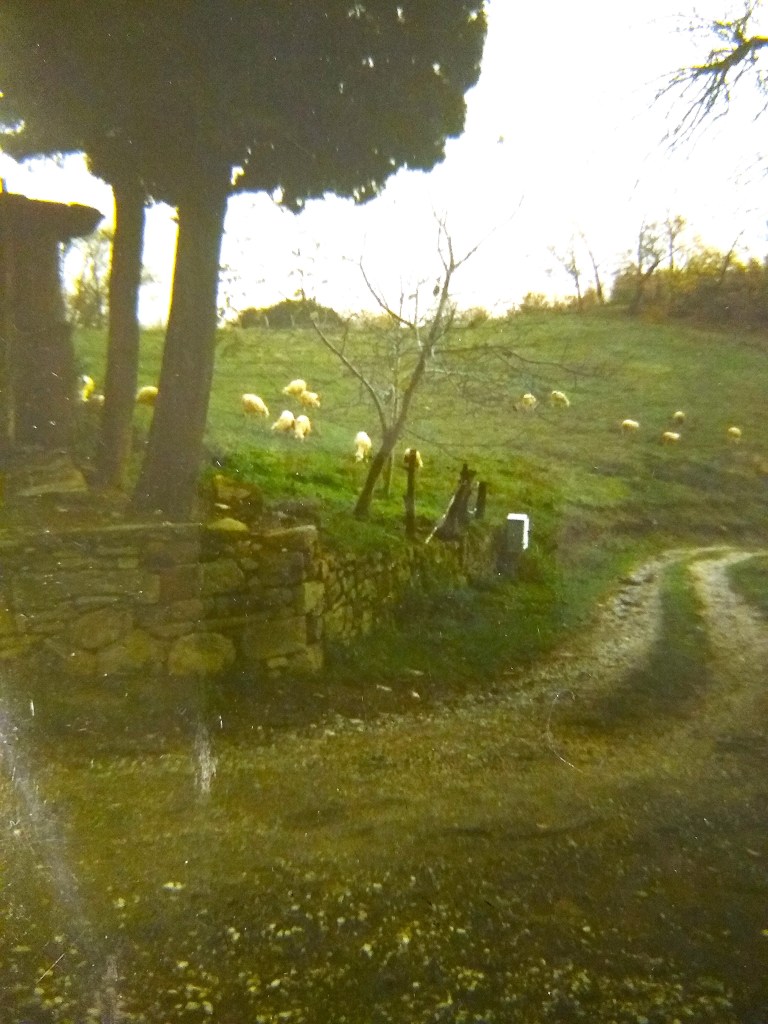
By the time I sailed from Venice to Istanbul, a couple years later, I could spot a flock of sheep on a Greek hillside from six miles away. I drew joy from them. I knew some old or young man or woman was with them, staring off across the fields down to the Ionian or the Aegean, maybe even seeing the mast and sail of my tiny boat. They would count their sheep, as I had, as they put them up for the night. They would feed them, and inspect them. And if they made cheese, like we did, they would milk them.
They would understand the importance of one sheep. To provide milk, and wool, and meat. They probably knew them all to look at, and knew when one was missing. They’d climb back up the path they’d all come down, and call out, listening for the plaintive “baah.”
Here’s the other thing I learned one night in the sheep barn. If I stopped feeding or shoveling dirty hay; if I just stopped and stood in the middle of the barn — they would all encircle me, and look at me. As if I was a charismatic leader. As if I was God.
So I finally grasped that scripture, too. Jesus didn’t refer to his people as his sheep because they followed him unquestioningly, as we currently think of sheep. Sheeple. He knew they saw him as their center, their guide, the human they trusted to keep them safe from evil and show them the clear path. When he wanted quiet, they followed him to the shores of Galilee, and encircled him. He had to do the miracle of the loaves and fishes to feed them. They weren’t leaving until he gave them what their souls were seeking.
So when the sheep stood in concentric circles around me, and just looked at me…well…the first time it happened was a little unnerving. But when it happened again, it was kind of fun. They seemed so expectant, though. I didn’t want to let them down. I was tempted to talk to them, but I had no wisdom to share. So, I started singing to them. And, in that way, I found out the truthfulness of another cliche: that almost all animals like music**.
I doubt we have many shepherds in America. We probably just let the herds out into well-fenced, dog-guarded fields and move them around as necessary. It’s a shame, really, because it’s a job that might mitigate some of our rampant mental illess. Stressed? Can’t sit still in class? Here’s an Rx – go to the school farm and tend to the sheep for a month. You can take the iPad with you and keep up with your lessons — but no social media. Just sheep. A little music. Maybe a few real books. Tell us how you feel in a couple weeks.
Just an idea. We already know how well being around horses works with the …troubled and challenged, so….
…Here are some sheep. Don’t lose them. They’ll follow you anywhere. But they’ll eat the raspberries.
________________________________________________________________________________________
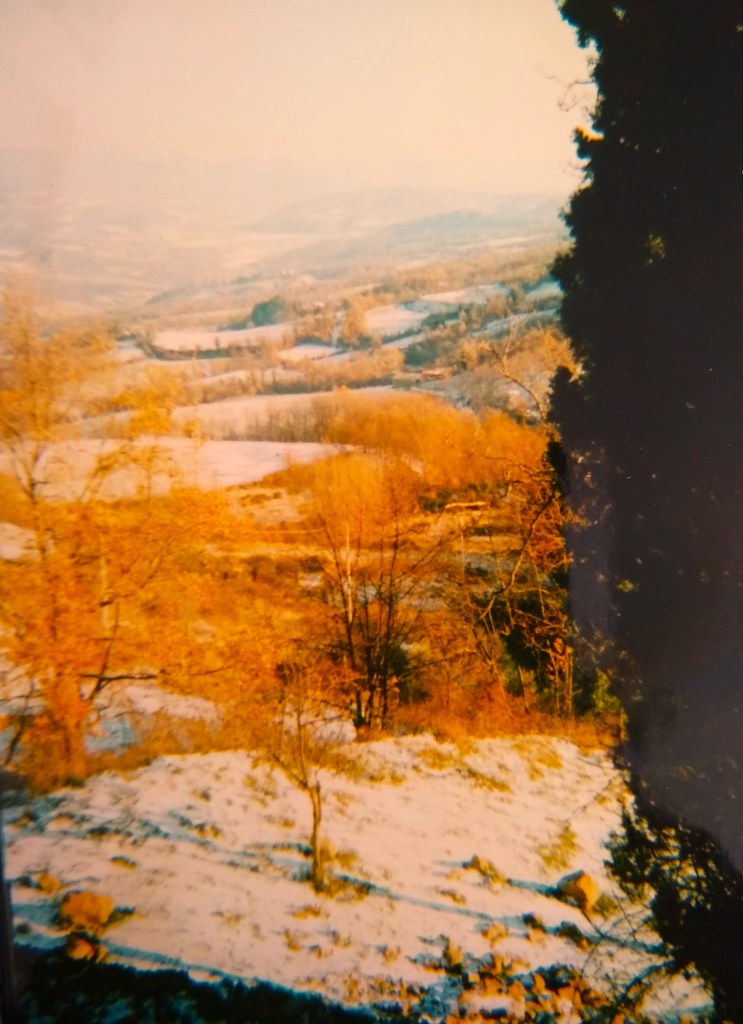
And THIS is what it looks like NOW! LINK I don’t know the current hosts, but I know it is still owned by one of my friends who restored it. (It was a B&B in the 1990s, too, but some of the nice rooms in the newer pix were part of the horse and sheep barn then. The kitchen is the same. My friends put the pool in a few years after I was there. But the real star is the location, and that hasn’t changed much in millenia.)
_________________________________________________________________________________________
- The first time I was left alone with the sheep for 3 weeks, we spray painted numbers on their backs, so I would know I had all 100 in the barn. My friend, the real farmer, knew them all by face and shape. Like Jesus knows his flock. I was not that confident.
- ** The second time I ran the farm by myself, I had a guest who helped me milk. He was a young guy from NYC, there with friends, and he loved milking the sheep. When I told him I sometimes sang to them, we started finding songs we both knew and hilarity ensued. That week, instead of hymns and Linda Ronstadt songs, the sheep got milked to every Broadway show tune we could think of. I fully expected them to start baa-ing along.
 ART and IDEAS
Leave a comment